
Technology is not something that can just cease to develop. It is something that will always keep developing till the end of time. Every advancement, every failed hypothesis, every successful integration will help to develop and advance through to the next era of technology.
The AI sector is an extremely fast-growing sector, and many new industries and businesses are integrating it into their everyday lives. AI is very versatile, and so can be fine tuned to fit the operating needs of a particular sector- for business, it can be made for data handling whilst in manufacturing it can be used to oversee production and maximise efficiency. Due to the nature of the development of AI, it will always keep developing be it through machine learning or external breakthroughs in technology.
Current (and possible future) developments within the AI sector:
- Integration-
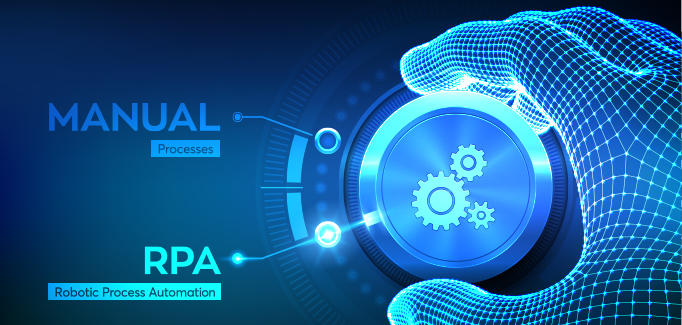
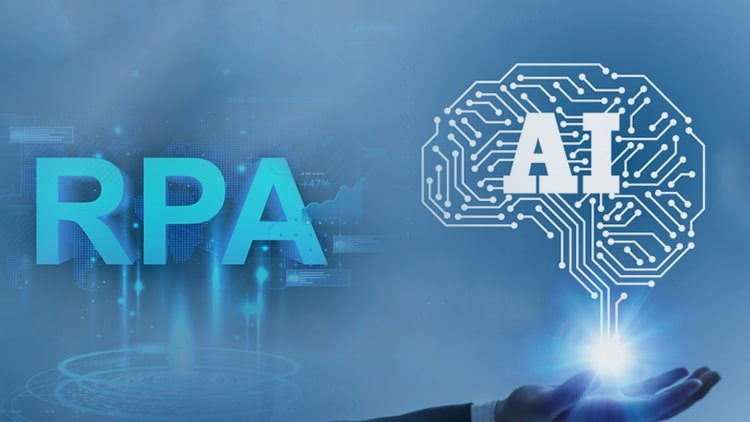
- AI being integrated with RPA- this is to create more efficient, powerful RPA with some AI capabilities such as image recognition, with this, it allows us to potentially address more, new ‘niche’ and real-time problems.
- AI integration in everyday life- this is already happening in the forms of amazon Alexa and google nest, as well as other digital assistants. In the future, the development of these assistants can lead to them automatically predicting and executing human needs (as opposed to today’s functions- where they only work on commands). This will drastically improve quality of life and will help out a lot more unable and disabled people about in their lives.
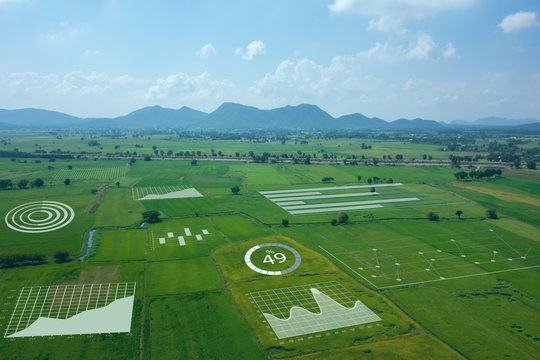
- AI’s computer vision being more powerful- the world is already using facial recondition For tracking/identifying criminals, signing in members of staff, or even just or social media filters. Advancing this can pave the way for more possibilities to use computer vision for; for example, we could use computer vision to ensure that people are following correct PPE guidelines (masks, hardhats, high vis jackets, safety goggles) or to ensure correct dressing codes (uniform, formal wear, casual) we can also develop it so that there are less ways to ‘fool’ the vision (wearing fake cosmetics, sunglasses, accessories etc.).
- Easy learning and development- right now, learning to code AI is a (somewhat) complex process. But due to the rise in technology, many industries and organizations are interested in adopting Machine Learning. Therefore, in the foreseeable future, we will see a rise in the number of data scientists. This also results in tools for AI to become more popular and mainstream, allowing for more amateurs to learn AI and ML development.
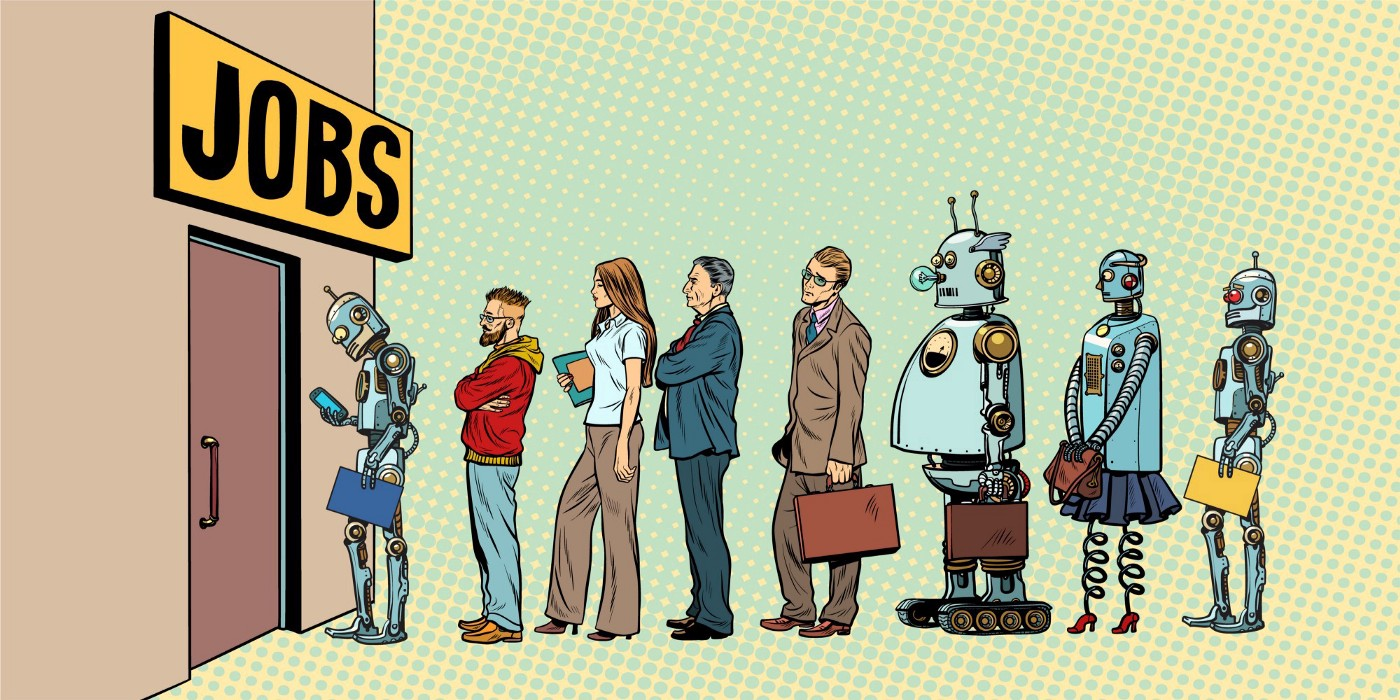
The RPA sector is not a fairly new technology sector to be introduced. In fact, the first use case for RPA can be recorded back to 1990/2000s! but even so, RPA is constantly growing. It is getting more powerful, offers more possibilities, is being integrated in more industries as well as into other technologies, such as AI. The demands for RPA is increasing as RPA doesn’t just emulate human actions- it does so much quicker and accurately than their human counterparts could ever do. This results in the employers replacing their human employees with RPA bots (as RPA is much cheaper than humans in the long term).
Current (and possible) RPA developments:
- Cloud Deployment- whilst this is not about RP itself, its development will heavily aid RPA. As RPA processes a lot of data, they need to be sure that the cloud has enough deposits to store all f the data being processed. As cloud deployment becomes quicker, bigger and more versatile, the effects it will have on RPA will be extremely noticeable. The bigger storage means that the more infrastructure can be built, increasing the number of operable RPA bots.
- Integration and adoption rate- the trend of adopting and implementing RPA into businesses is booming, due to factors such as being cheaper to deploy, more skilled workers available, increase in low retention rates, individuals working from home (covid-19) and more versatility of RPA in sectors. With the influx of RPA in the real world, more tests and research can be carried out per industry. This means that better assumptions and results can be taken on how to improve RPA as a whole. Allowing for a whole new layer of efficient, faster and more powerful RPA.
- RPA in ERP- ERP is enterprise resource planning. It is a business process management (BPM) software that manages a company’s financials, everyday operations, commerce, reporting, manufacturing, logistics and human resource activities. (Essentially running the business in the background). It is currently being integrated with RPA, but this is only the beginning stages. The result of the integration can be used to provide a central ‘hub’/point to manage most (if not all) business processes. It will become the ‘brain’ of the business, managing its many processes and operations to keep it running, in the background. And as it is all centralised, all the information can be accessed from one single point, leading to faster processes, experiences and overall, better organisation.
These developments for both RPA and AI are just the tip of the iceberg. There will be more developments, each more powerful and revolutionary that the last. There is just no way that we can know what developments are next, and how we can adapt to fit these new developments. We just have to wait and see
The world is constantly developing, and with it, so will technology as RPA and AI. One day, technology may advance so much that terms such as AI and RPA- both of which power most of our day-to-day processes- they may be but obsolete terms in the future.